tl;dr
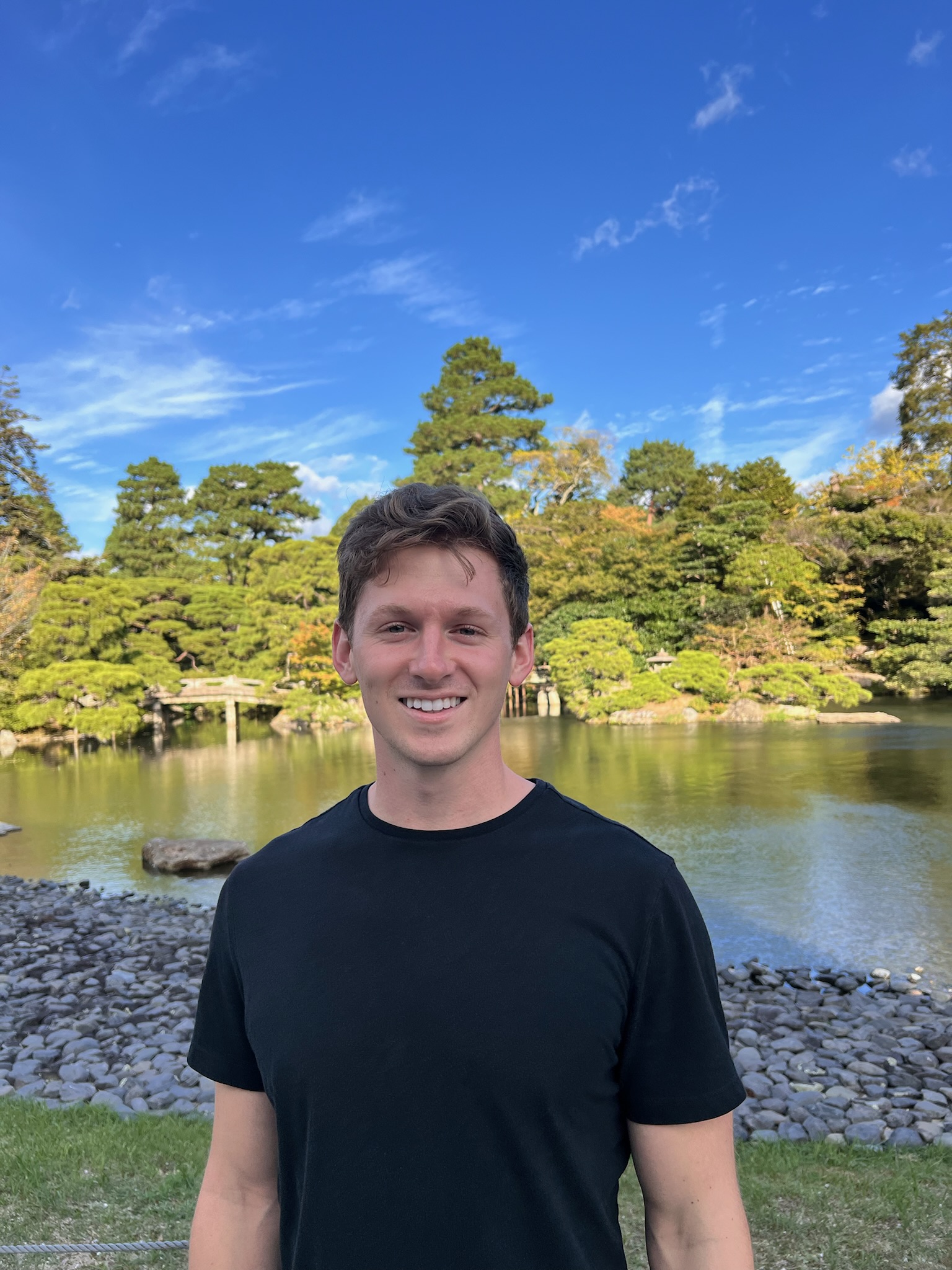
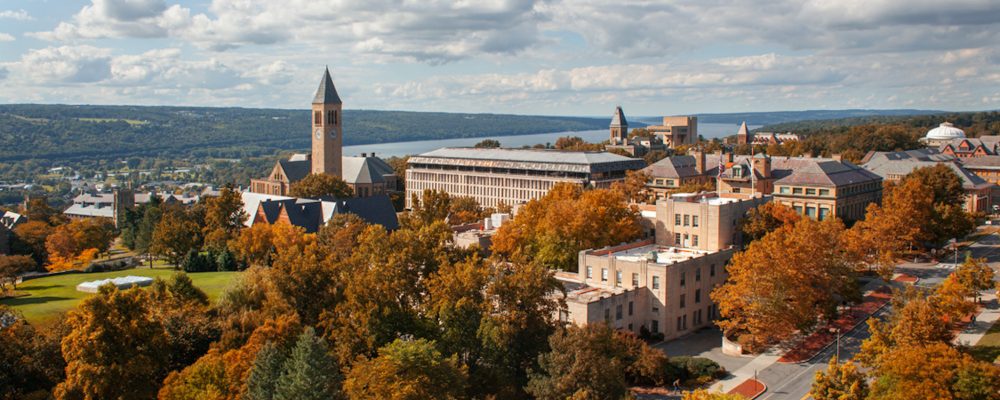
I have a Bachelor of Science in Electrical & Computer Engineering and a Master of Engineering in Computer Science, both from Cornell University. I’ve interned at the Cleveland Clinic, GE Aerospace, and Blue Origin. I’m currently a software engineer at Blue Origin making the lunar lander testbeds collect and analyze large amounts of data quickly.
Education
I started my Bachelor of Science in Electrical & Computer Engineering in 2019 and finished it in May 2023. During my final semester, I also started taking courses to fulfill the requirements for a Master of Engineering in Computer Science, which I completed in December 2023. Throughout undergrad I worked \(\geq 1\) job per semester to pay for school, including during Covid when I worked the night shift at a Costco warehouse (which was a great way to keep me awake for my early morning online lectures). Most of my coursework has emphasized machine learning (RL, CV, NLP), but I’ve also covered a lot of fundamental software courses as well (OS, embedded systems, algo, functional programming). A non-exhaustive list of some courses I’ve taken:
Analysis of Algorithms \(\cdot\) Operating Systems \(\cdot\) Embedded Systems \(\cdot\) Functional Programming \(\cdot\) ML for Robot Decision-Making \(\cdot\) Design with Microcontrollers \(\cdot\) Computer Vision \(\cdot\) Robot Perception \(\cdot\) System Security \(\cdot\) Large-Scale ML \(\cdot\) Natural Language Processing
One of my absolute favorite courses (not listed above) was the honors physics course I took my very first semester at Cornell. If I’m honest, I haven’t had to use Minkowski space-time diagrams or calculate the force on a cylindrical flagpole from dust particles in a sandstorm since the class ended. But! That class really forced me to think about how to approach difficult problems. It taught me how to simplify as much as possible, break problems into pieces that can be solved, and combine these subproblems in a logical way. That knowledge was what the course was really about, not mechanics and special relativity. Totally worth the weekly all-nighter I’d pull to finish the problem set on time.
Work
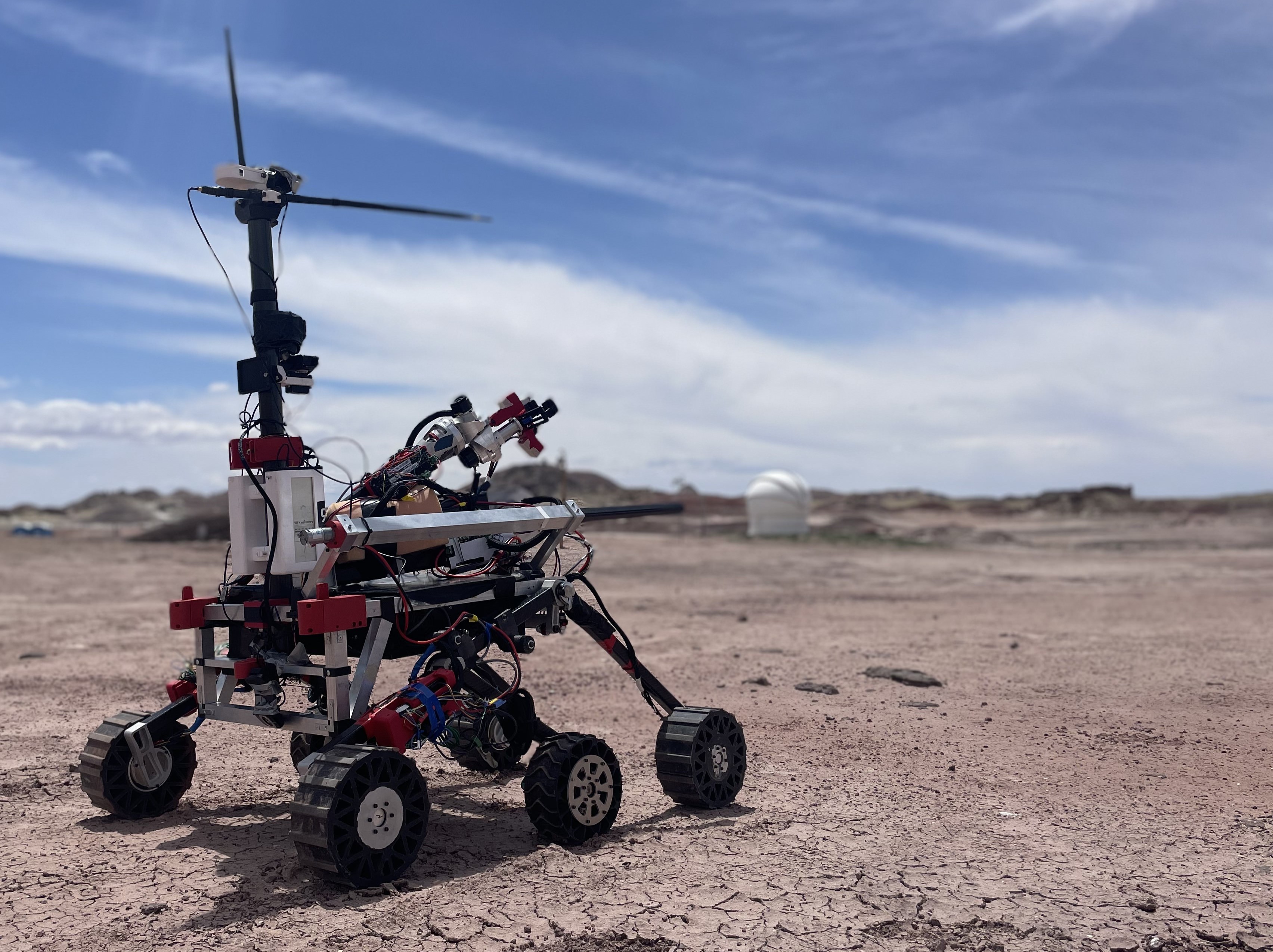
I was a member of the Cornell Mars Rover student project team for three years, where I was a member of the electrical team. We built a mock Mars rover each year to compete in the University Rover Challenge. I developed firmware for brushless DC motor control, designed my own PCBs to control sensors and motors, and wrote code to visually display sensor data for easy debugging. And I got to meet some really fun people!
Our 2023 rover, Atlas
I’ve been a teaching assistant for ENGRG 1050, a non-technical course that introduces engineering freshmen to Cornell and answers basic questions that freshmen have. I was also a teaching assistant for CS 4/5750: Foundations of Robotics which is a technical course. In that role, I helped students understand and debug path planning, localization, and control algorithms in Python and ROS.
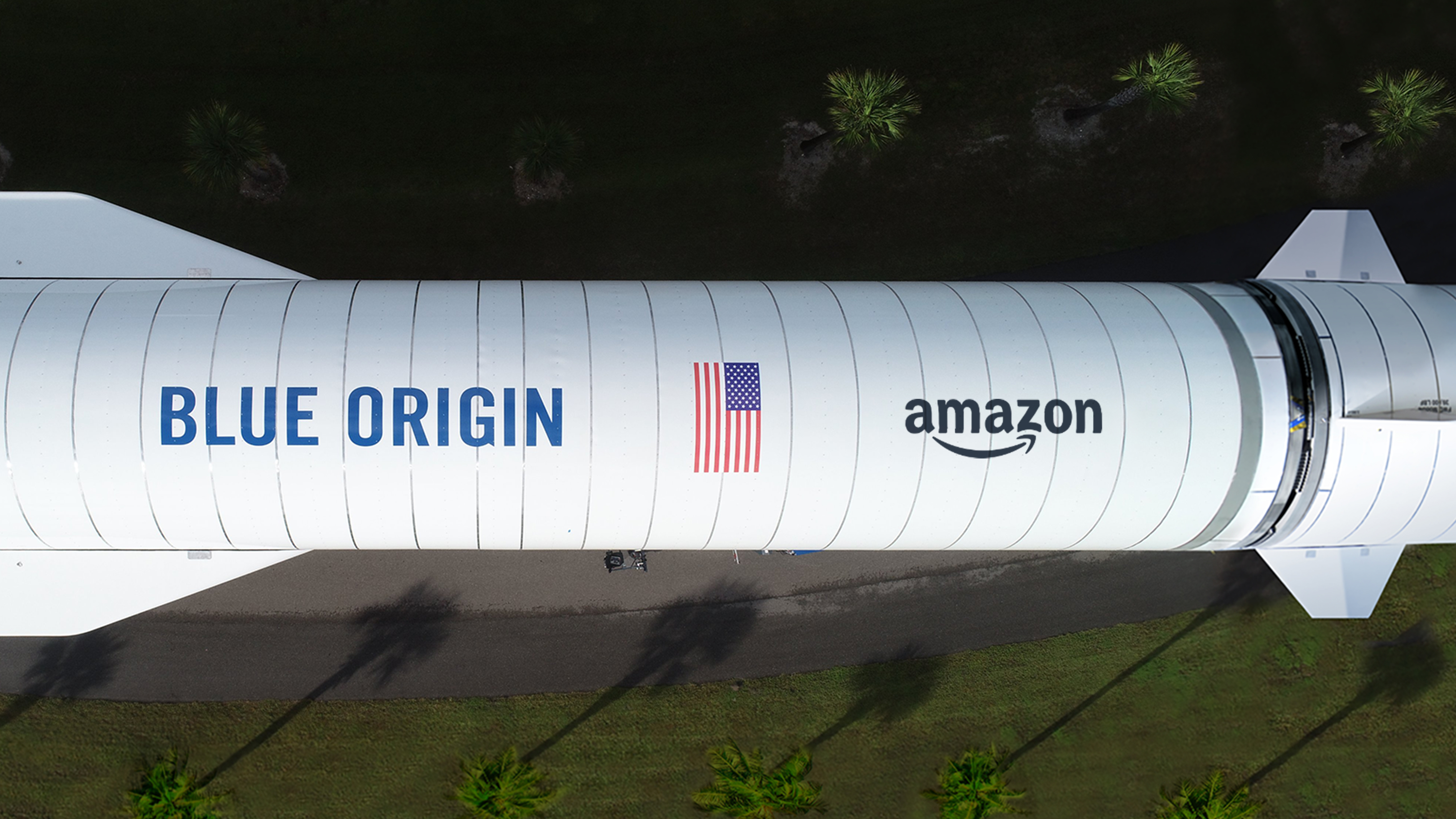
Interning at GE Aerospace and Blue Origin gave me practical software dev experience, though neither was machine learning related. At GE Aerospace, I prototyped a defect detection system that uses classical computer vision techniques with ultrasound imaging (I pleaded with my manager to consider using modern ML, but interns don’t usually have that kind of pull). At Blue Origin, I worked with the Communication & Instrumentation Software team. I wrote code to serialize and transmit data among sensors, cameras, and computers on the New Glenn rocket.
New Glenn
During my Master’s program, I was involved with the creation of CS 4782: Intro to Deep Learning which will be taught at Cornell starting January 2024. I wrote the lecture material and assignments for the generative vision course module, and also was a guinea pig for several other modules in the course.
For my M.Eng. project, I worked in the computer vision role (data science + software dev) on a team seeking to use street camera feeds to predict vehicle emissions in NYC. I got to work on all aspects of the ML pipeline (short of compression and deployment, because I graduated before the project wrapped up). That includes manually annotating thousands of vehicles to create our custom dataset, training a YOLO model on the data, and writing methods to convert our labeled bounding boxes from JSON to YOLO’s label format.
More recently, I’ve returned to Blue Origin to work on the moon lander program. The lunar lander testbed is a complicated system; it has both actual and simulated hardware to test the flight software, including actuators, network switches, LIDAR, cameras, etc.
I’ve gotten to build a containerized network monitoring application that gathers data from network switch interfaces on the vehicle testbed, and have currently been overhauling the way we analyze flight software data that is generated during simulations. The skills I learned working with large-scale ML pipelines in college have paid dividends; Being skilled with Polars, DuckDB, and Apache Arrow/Parquet/Feather has given me a huge boost and helped me develop data pipelines that are scalable and efficient.